
PSYCHEDELICS ARE EVERYWHERE: In the News, on TV, and in the Lab
What the latest research, active trials, and safety details do, and do not, tell us
By Heleen Woest, MA, LPC, NCC
Psychedelics have pulled off a remarkable rebrand. Not long ago, mentioning magic mushrooms in polite company could make everyone suddenly very interested in the cheese tray. Now they are on Netflix, in newspaper headlines, and inside major medical journals.
They are also attracting real research money again.
In 2021, the National Institutes of Health funded a nearly $4 million multisite psilocybin study for tobacco use disorder. Johns Hopkins called it the first NIH grant in more than 50 years to directly investigate the therapeutic effects of a classic psychedelic. The Department of Veterans Affairs later funded its first psychedelic-assisted therapy study since the 1960s, and Congress appropriated $10 million for a Department of Defense clinical-trial program involving active-duty service members with PTSD or traumatic brain injury.[19] [20] [21] [22]
That may not sound as exciting as a dramatic documentary soundtrack. Grant applications rarely do. But after decades when this field was pushed to the margins, serious funding and carefully designed studies matter.
And honestly, we will take the research. Veterans desperately need better options, and so do people living with depression, PTSD, addiction, chronic pain, serious illness, and other conditions that have not responded well enough to existing care.
This article is a follow-up to From Stigma to Salvation: The Psychedelic Renaissance in Trauma Therapy. For more about the needs of veterans and first responders, see my earlier post.[11] [12] Here, I am focusing on what is new: current trials, ketamine developments, state access, and what the evidence can and cannot tell us.
Netflix may not run clinical trials, but it knows how to start a conversation
Recent films have made psychedelic treatment stories understandable to people who would never read a Phase 3 protocol for fun. The most visible is In Waves and War, which premiered at Telluride in 2024 and arrived on Netflix in November 2025. It follows three former Navy SEALs seeking ibogaine and 5-MeO-DMT treatment in Mexico.[2] [3]
Other recent documentaries include:
- Of Night and Light: The Story of Iboga and Ibogaine, 2023. Ibogaine, addiction, PTSD claims, research, and regulation, with veterans as an important part of the story.[4]
- Magic Mushrooms: Can They Change Your Mind?, 2023. A CNN investigation of a Jamaican psilocybin retreat and Oregon’s regulated system.[5]
- Pursuit of Ketamine, 2023. A three-part series about ketamine for depression and chronic pain.[6]
- Psychedelics: Stepping into the Unknown, 2024. An Australian documentary following a psilocybin-assisted therapy trial for generalized anxiety disorder.[7]
- Music for Mushrooms, 2024. A cultural look at music, ceremony, community, nature, and psychedelic experiences.[8]
- In Waves and War, 2024 festival premiere and 2025 Netflix debut. A veteran-centered story about trauma, brain injury, family strain, ibogaine, and 5-MeO-DMT.[2] [3]
- Edge of Life, 2025. Psilocybin-assisted psychotherapy in palliative care alongside Indigenous perspectives.[9]
- Journeys, 2026. Psilocybin, trauma, depression, end-of-life care, ethics, cost, and access, including veteran stories.[10]
Documentary release dates can be slippery because a festival premiere, television premiere, regional release, and streaming debut may all be listed separately. Apparently documentaries can have almost as many birthdays as the British royal family.
More importantly, a documentary is not a clinical trial. A personal story can show us why research matters. It cannot tell us how often a treatment works, who is most likely to benefit, how durable the benefit is, or what risks appear in a larger population.
When did psychedelic research go underground?
The clean social-media version says psychedelic research was banned in 1970. The accurate version is less dramatic and more useful.
Federal restrictions began with the Drug Abuse Control Amendments of 1965, which took effect in 1966. The Food and Drug Administration then placed LSD under a controlled investigational system. Congress added criminal penalties for unauthorized possession in 1968. The Controlled Substances Act was enacted in 1970 and generally took effect in 1971, placing LSD, psilocybin, psilocin, DMT, and mescaline in Schedule I.[13] [14] [15] [16]
Authorized research was still legally possible. It simply became much harder. At the same time, drug supply dried up, research standards changed, commercial interest weakened, and the regulatory climate became considerably less friendly. The best historical summary is that psychedelic research was progressively constrained beginning in 1965 and largely abandoned as a mainstream clinical program by the early 1970s.[18]
The United Nations Convention on Psychotropic Substances was concluded in 1971, but it did not enter into force until 1976, and the United States ratified it in 1980. It reinforced international control. It did not cause the original American shutdown.[17]
- 1965 to 1966: New federal controls and FDA rules made LSD research more difficult, but did not ban authorized studies.
- 1968: Congress criminalized unauthorized possession of LSD and other hallucinogens.
- 1970 to 1971: Schedule I created a much heavier approval and security burden.
- Early 1970s: Restricted supply, tighter regulation, changing research standards, and weak commercial interest pushed the field out of mainstream medicine.
- 2021: NIH funding returned for a therapeutic classic-psychedelic trial.
- 2024 to 2026: VA, DoD, NIH, and FDA activity moved the field toward a broader research agenda.
The veteran numbers are hard to ignore
The latest national Veteran suicide report available by September 17, 2026 uses 2023 mortality data. That delay matters. Suicide statistics are not a live counter.
In 2023, 6,398 Veterans died by suicide, an average of 17.5 deaths per day. After accounting for age and sex, Veteran suicide deaths were 17.7 percent higher than expected under non-Veteran rates. Veterans ages 18 to 34 had the highest unadjusted rate, at 47.9 deaths per 100,000.[25] [26]
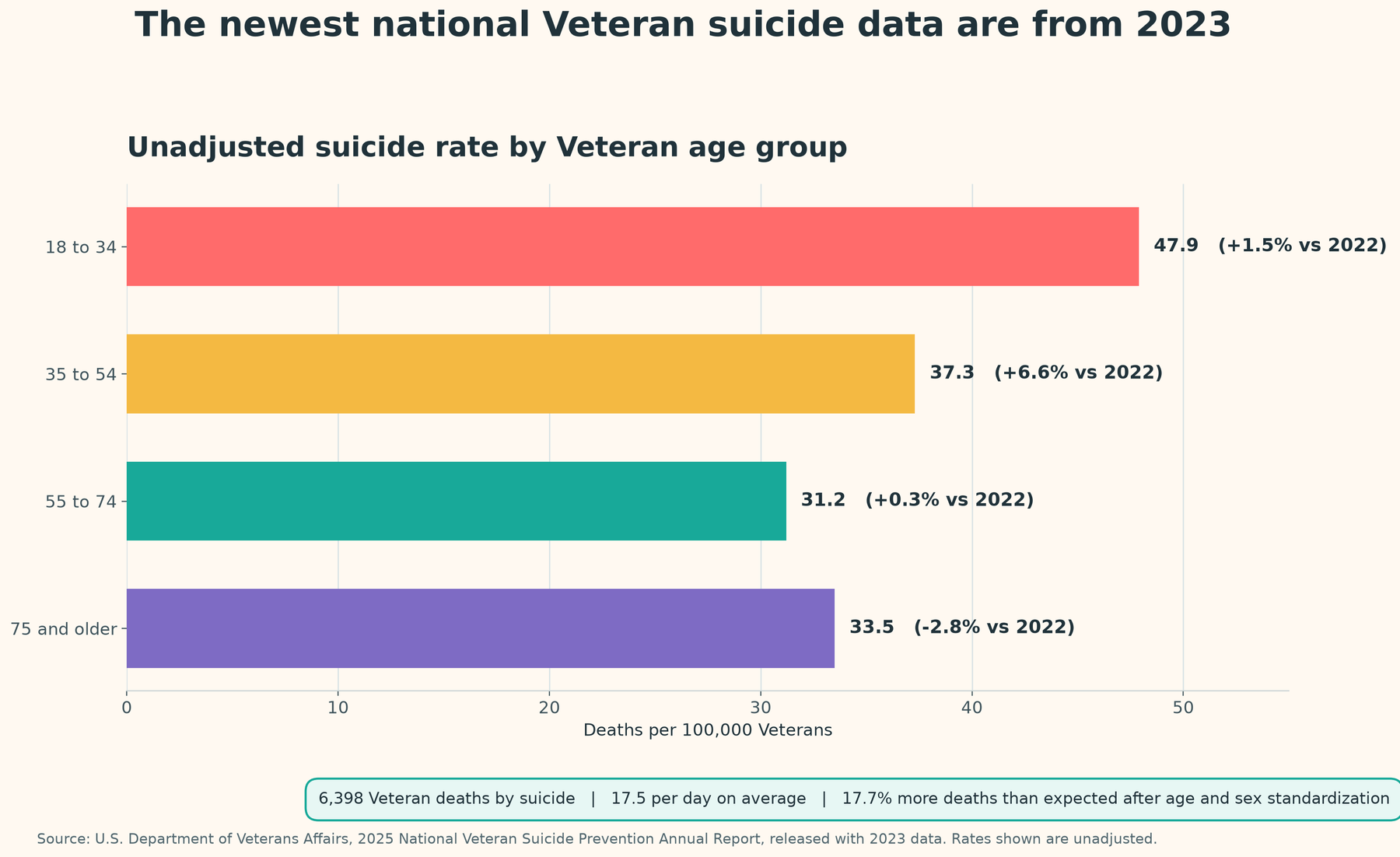
This does not mean psychedelics are an anti-suicide treatment. A drop in a depression scale or a suicidal-ideation score is not the same thing as fewer suicide deaths. It does mean that veterans deserve serious, well-funded research instead of another decade of being told to wait patiently while suffering.
If you or someone you know is in immediate danger in the United States, call or text 988, call 911, or go to the nearest emergency department. An experimental treatment, and especially an at-home session, is not a substitute for emergency care.
Promising is not the same as proven
Results are encouraging across several conditions. But there are also failed primary endpoints, incomplete safety data, short follow-up periods, and one particularly stubborn research problem called functional unblinding.
Functional unblinding means that people can often guess whether they received the real drug. If a participant sees patterns breathing on the wall, feels profound dissociation, or experiences a surge of emotional openness, that person is unlikely to think, “Clearly I received the inert placebo.” Expectations can then affect symptom ratings, therapist behavior, and even how researchers interpret change.[23]
Many trials also test a full treatment package. The package may include medical screening, preparation, a long monitored session, two therapists, and integration afterward. That is not a flaw. It may be exactly what makes treatment safer and more effective. But it means the study is testing the medicine inside a structured care system, not a molecule floating alone in space.
What the completed studies actually found
| Treatment | Encouraging finding | What gives me pause |
|---|---|---|
| Psilocybin | Depression and smoking benefits; 9-study review, 436 people.[27] [28] [30] [31] | Mixed results and weak masking. One 144-person trial missed its main endpoint; the 20-person Lyme pilot had no control group.[1] [29] [32] |
| MDMA therapy | Two Phase 3 PTSD trials reported added improvement.[33] [34] | Weak masking, therapy-package effects, and no FDA approval.[24] |
| LSD | Anxiety improved through 12 weeks in a 198-person trial.[35] | Long sessions, weak masking, selected sample. |
| Ibogaine | Large reported gains in 30 Special Operations veterans.[36] [37] | No control group and serious heart risks.[38] |
| Ketamine or esketamine | Rapid depression relief, relapse prevention, and a strong ECT comparison.[39] [40] [41] | Effects may fade; repeat care and monitoring add cost. |
| Nitrous oxide | Short-term improvement in a 7-trial review and a 60-person older-adult trial.[42] [43] | Small, brief studies; no settled maintenance plan. |
That is why I use promising rather than proven. I am not trying to spoil the party. I am trying to describe the research honestly.

There are many trials running right now
As of September 17, 2026, the table below includes 32 notable U.S. studies with an active registry status across mental health, substance use, trauma, suicidality, chronic pain, traumatic brain injury, and veteran-related care. Twenty-three were recruiting, 8 were active but not recruiting, and 1 was enrolling by invitation.
That is not the same as saying 32 clinics have psychedelic appointments available. A study can be active while its local site is closed. Eligibility can be narrow. Enrollment figures may be targets, not completed counts. ClinicalTrials.gov is a registry, not an FDA approval sticker.[55]
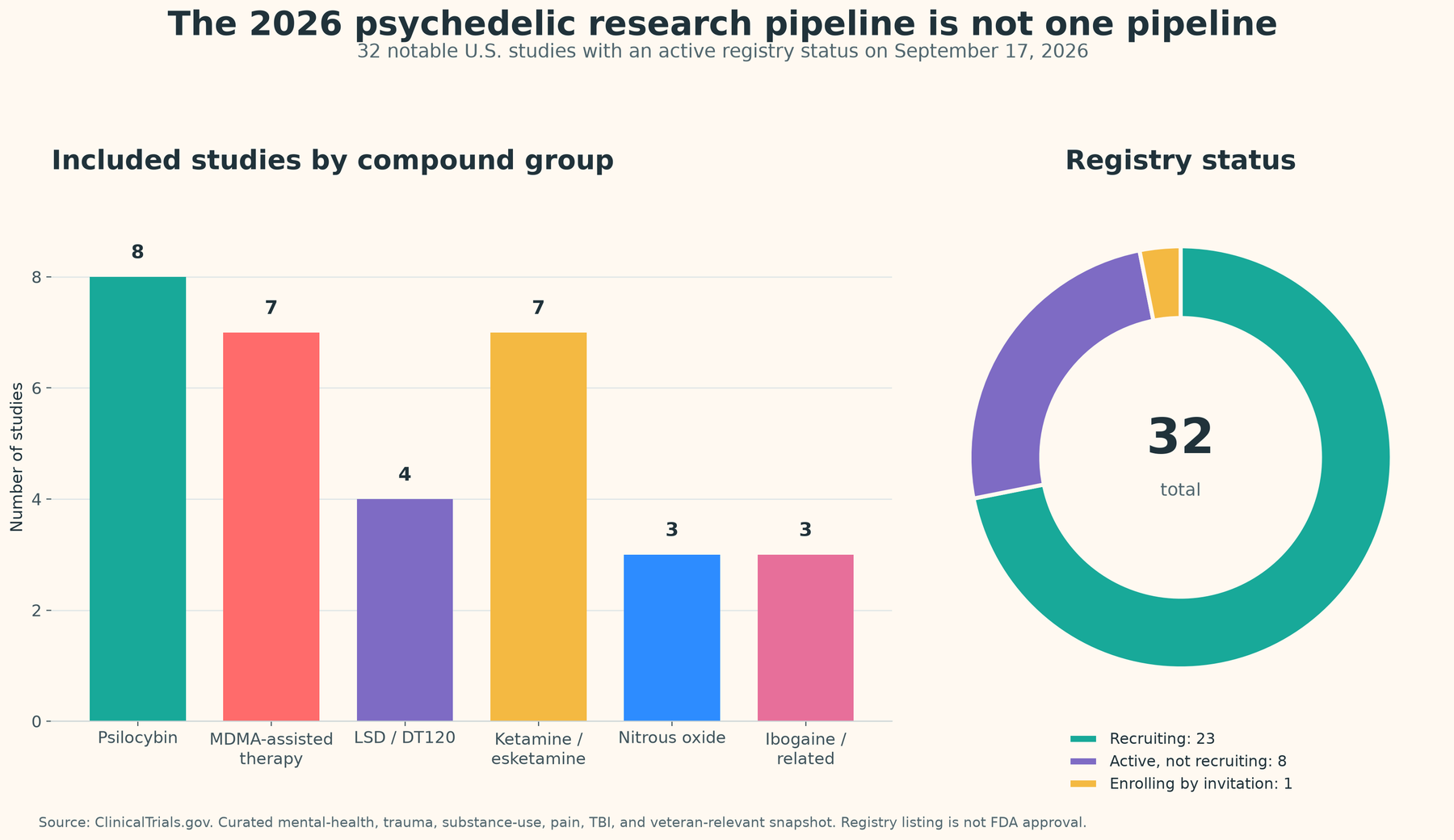
What researchers are studying now
| Area | Active records | Main questions | Example |
|---|---|---|---|
| Psilocybin | 8 | Depression, PTSD, addiction | Veteran depression |
| MDMA therapy | 7 | PTSD, OCD, postpartum care | Veteran PTSD and alcohol |
| LSD | 4 | Anxiety and depression | Phase 3 depression trial |
| Ketamine or esketamine | 7 | Depression, PTSD, pain | Veteran pain and depression |
| Nitrous oxide | 3 | Depression, OCD, suicidality | Depression and suicidality |
| Ibogaine-related | 3 | TBI and brain imaging | Imaging study |
The full registry list is useful for researchers. For a blog reader, the main point is simpler: the field is no longer testing only one drug for one diagnosis. It is moving into later phases while also widening the questions being asked.
The recruiting ibogaine imaging study does not administer ibogaine in the United States. Participants arrange treatment outside the country, and the university studies brain changes before and afterward. That distinction is less glamorous than a headline, but much more accurate.
These substances are not all the same
Calling all of these substances “psychedelics” is convenient, but clinically sloppy. Psilocybin and LSD are classic serotonergic psychedelics. MDMA is usually described as an entactogen. Ketamine and nitrous oxide are dissociative medicines. Ibogaine has unusually complex pharmacology and unusually serious cardiac concerns.
| Substance | Best signal | Main caution | Current U.S. access |
|---|---|---|---|
| Psilocybin | Depression, addiction | Mixed trials; mania or psychosis risk | Trials; Oregon and Colorado services.[27] [44] [45] [46] [47] |
| MDMA | PTSD | Heart, temperature, misuse, and boundary risks | Trials; rare expanded access.[24] [33] [34] [47] [57] |
| LSD | Anxiety | Long session; anxiety and heart risks | Trials only.[35] [47] |
| Ibogaine | Early TBI and addiction signals | Potentially fatal arrhythmias | Research; narrow legal pathways.[36] [38] [47] [57] |
| IV ketamine | Rapid depression relief | Benefit may fade; monitoring required | Legal off-label care.[39] [41] [48] |
| Spravato | Treatment-resistant depression | Clinic dosing; 2-hour monitoring | FDA approved with REMS.[40] [50] |
| Nitrous oxide | Early depression signal | Small evidence base; misuse harms | Off label or investigational.[42] [43] [51] |
Where is psilocybin actually legal to receive?
This question needs more than a yes-or-no answer because FDA approval, state-regulated services, clinical trials, expanded access, decriminalization, and religious exemptions are different legal categories. Expanded access is a narrow investigational pathway, not a general right to receive a drug.[57]
| State | Status | Basic rule |
|---|---|---|
| Oregon | Operating | Adults 21 and older use licensed service centers with state-licensed facilitators. No take-home product.[44] |
| Colorado | Operating | Adults 21 and older use licensed facilitators or clinical facilitators. No ordinary retail sale.[45] |
| New Mexico | Enacted, not yet open at the cutoff | A medical program for qualified patients, to be supervised by permitted New Mexico clinicians.[46] |
No fourth state had an equivalent enacted statewide system that combined regulated production with supervised administration at the cutoff. Some cities and states have decriminalized possession, reduced penalties, funded studies, or created advisory boards. Those steps can matter. They do not create licensed treatment.
State protections also do not erase federal Schedule I law, authorize interstate transport, or make an unlicensed retreat legal.
Who can administer what?
This is the part where the answer becomes less Instagram-friendly.
Psilocybin in federal research: A qualified study investigator and protocol team must operate under an effective Investigational New Drug application, Institutional Review Board oversight, and Drug Enforcement Administration authority. A therapist license by itself does not authorize someone to possess or administer psilocybin.[23] [47]
Psilocybin in Oregon or Colorado: The person supervising must hold the specific state facilitator credential. In Oregon, a physician or therapist who wants to facilitate still needs that facilitator license and must keep the roles separate during the administration session. Colorado distinguishes ordinary facilitators from clinical facilitators who also hold certain professional health licenses.[44] [45]
MDMA, LSD, and ibogaine: These remain investigational Schedule I substances under federal law. In practice, they are administered in authorized research by qualified investigators and protocol teams. Case-specific expanded access may be legally possible only if the sponsor supplies the product and the physician obtains the required FDA, IRB, and DEA authorizations. It is not an ordinary prescribing pathway. An ordinary therapist who has completed a weekend course has no authority to possess or administer them.[47] [57]
Racemic ketamine: A state-authorized prescriber orders it. Depending on state law, dose, intended sedation, setting, and delegation rules, administration may involve physicians, advanced-practice clinicians, anesthesia professionals, or trained nurses. The clinic should be able to monitor vital signs and respond to airway, cardiovascular, psychiatric, or vomiting emergencies.[48] [49]
Spravato: The patient uses the nasal device under direct healthcare-provider supervision in a REMS-certified setting. Monitoring lasts at least 2 hours, and the product is not dispensed for home use.[50]
Nitrous oxide: Medical gas is administered by or under an experienced licensed practitioner. State medical, dental, nursing, anesthesia, and facility rules determine exactly who can start, adjust, monitor, and stop it.[51]

Ketamine has been here longer
Ketamine needs its own section because it did not follow the same path as psilocybin or LSD.
The FDA approved Ketalar injection for anesthesia on February 19, 1970. Ketamine remained an accepted medical drug and is now in Schedule III. That gave clinicians decades of anesthesia experience, a legal supply chain, and the ability to use an approved product off label. The first modern placebo-controlled depression trial was published in 2000 and included only seven completers, but it helped launch a much larger rapid-antidepressant research field.[48] [60]
Spravato, the intranasal S-enantiomer called esketamine, was approved in 2019 for treatment-resistant depression with an oral antidepressant. In 2020, the label expanded to depressive symptoms in adults with major depression and acute suicidal ideation or behavior, still with an oral antidepressant. In January 2025, the treatment-resistant depression indication expanded to allow Spravato as monotherapy or with an oral antidepressant.[50]
That does not mean “ketamine is FDA approved for depression” in every form. The exact product, route, and indication matter.
A quick ketamine comparison
| Option | Legal position | What to know |
|---|---|---|
| IV ketamine | Legal, off label | Strong rapid-effect evidence; clinic monitoring.[39] [41] |
| Spravato | FDA approved | REMS clinic; at least 2 hours of monitoring.[40] [50] |
| Compounded ketamine | Legal if properly prescribed; not FDA approved | Variable evidence and absorption; at-home warnings.[49] |
| Nitrous oxide | Depression use is off label or investigational | Early evidence; professional delivery; no maintenance standard.[42] [43] [51] |

Where Mindbloom and Fluence fit
Mindbloom and Fluence are often mentioned in the same conversation, but they do different jobs.
Mindbloom is a patient-facing management and technology platform that supports independently owned medical practices. Affiliated licensed clinicians evaluate patients and prescribe compounded ketamine where permitted. The program includes telehealth, coaching, integration support, and a physically present adult peer monitor for dosing. Its large real-world studies are useful, including an observational report involving 11,441 patients, but the studies did not include randomized control groups. They therefore cannot prove that the program is superior to IV ketamine, Spravato, psychotherapy, or standard antidepressants.[52] [53]
Fluence is a professional education and training company. It offers continuing education, certificate programs, trial-therapy training, and a clinician directory. Fluence does not diagnose patients, prescribe ketamine, or operate a medical clinic. A training certificate does not create a professional license or authority to prescribe or administer a controlled substance.[54]
A polished website, a training certificate, and a medical license may all look impressive in a browser tab. They are still three very different things.
Nitrous oxide is having a surprisingly serious moment
Nitrous oxide is familiar from anesthesia and dentistry, which may make it sound almost quaint. In depression research, however, it is being studied as a rapid-acting intervention related to glutamate signaling.
A 2025 systematic review combined 7 trials and 247 participants. A single 50 percent nitrous oxide session was associated with symptom improvement at 2 and 24 hours, but not at 1 week. Then a 2026 multicenter trial in 60 adults ages 60 to 90 found a 6.2-point greater improvement on a standard depression scale at 2 weeks after one supervised session.[42] [43]
That is worth studying. It is not a reason to raid the whipped-cream aisle.
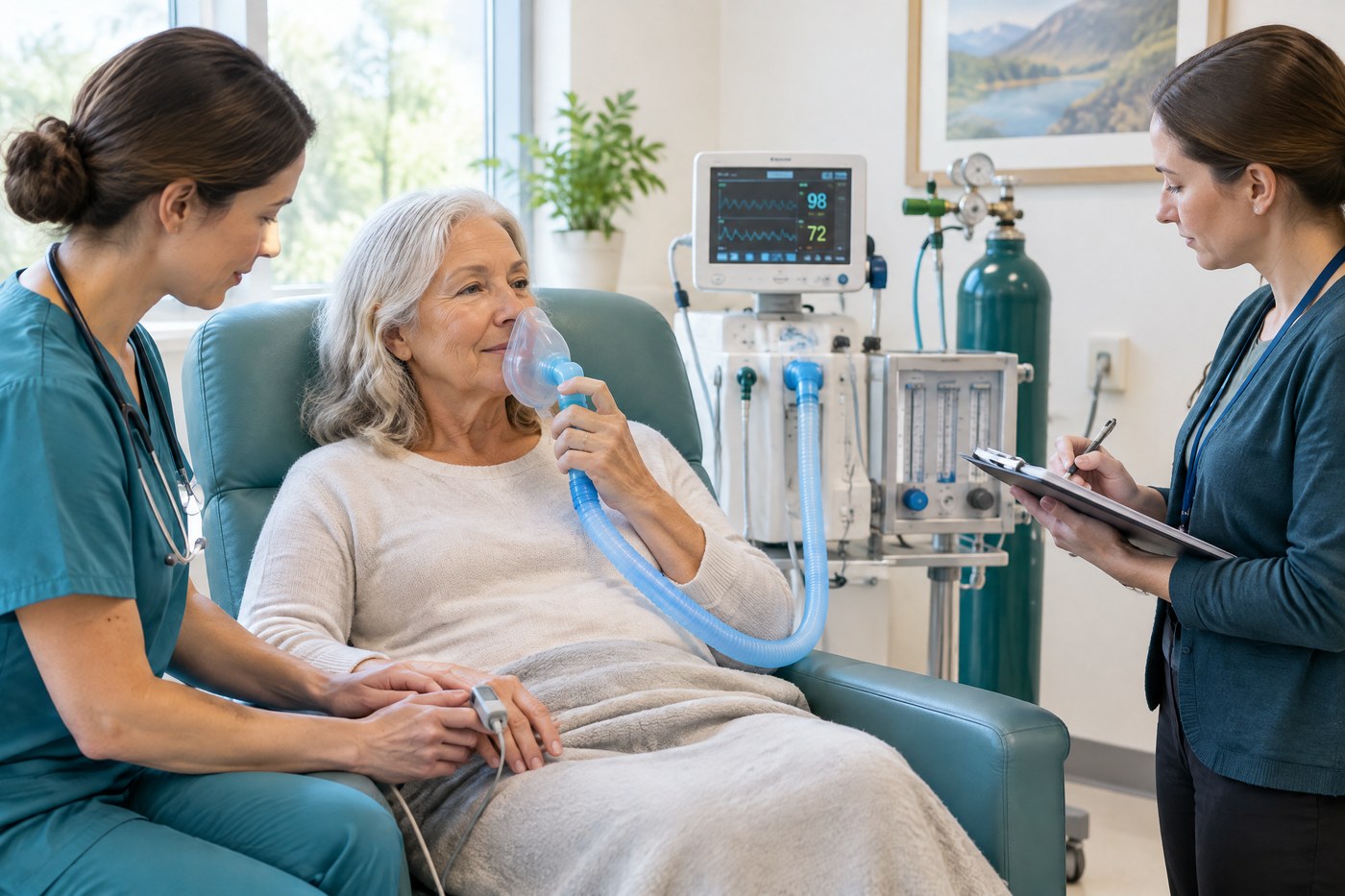
Repeated recreational exposure can functionally inactivate vitamin B12 and can cause anemia, nerve damage, spinal-cord injury, psychiatric symptoms, blood clots, hypoxia, and death. Clinical research uses controlled oxygen mixtures, professional equipment, trained staff, monitoring, and ventilation or scavenging.[43] [51] [61] [62]
What I am watching next
Forecasting this field is risky. It can swing from breathless optimism to a regulatory cold shower before lunch. Even so, here is what I am watching.
1. Phase 3 results will matter more than film reviews
The next major turning points will come from Phase 3 psilocybin and LSD programs, not documentaries. A moving film can change public willingness to ask questions. It cannot answer FDA questions about durability, safety, masking, dose, or who should not receive treatment.
2. MDMA will need a stronger regulatory package
Two positive Phase 3 PTSD publications did not produce FDA approval. The agency requested another randomized trial, better long-term evidence, stronger safety capture, and clearer treatment boundaries. If MDMA eventually reaches practice, the delivery system will probably be highly structured. This is unlikely to become a casual prescription followed by “good luck and remember to hydrate.”
3. State psilocybin systems may grow before federal approval arrives
Oregon and Colorado already have legal state systems, and New Mexico is building a medical model. We will likely learn a great deal about training, price, adverse-event reporting, access, and client selection from states before an FDA-approved psilocybin product becomes available.
4. Ketamine and esketamine will remain the practical clinical bridge
They already have legal prescriber pathways, established products, and trained clinicians. Spravato has the clearest standardized psychiatric framework. IV ketamine has a larger independent acute-efficacy literature but remains off label. Expect more scrutiny of compounded at-home products, especially around pharmacy quality, monitoring, emergency plans, and advertising claims.[49] [50]
5. Ibogaine will remain research-first
The dramatic veteran data deserve rigorous trials. They do not cancel the cardiac signal. Routine U.S. use would require standardized pharmaceutical production, dose-finding, electrocardiograms, electrolyte and liver screening, drug-interaction controls, and controlled efficacy evidence.[36] [38]
6. Nitrous oxide may find a focused niche
Because the effect can appear quickly and the gas clears quickly, nitrous oxide may become useful in carefully selected research or specialty settings. But maintenance, repeated-exposure safety, and who benefits most are still open questions.
7. The treatment system may matter as much as the molecule
Who screens? Who sits with the patient? Who handles a medical emergency? What counts as adequate preparation? How are touch, consent, and therapy boundaries managed? Who provides integration? Who pays for 6 to 8 hours of monitored care? These questions are no longer side notes. They may determine whether psychedelic treatment becomes safe mental-health care or merely an expensive experience with excellent lighting.
Questions to ask before considering any psychedelic or ketamine service
A responsible program should be able to answer these questions without becoming defensive:
- What exactly is the substance, formulation, dose, and route?
- Is this FDA approved for my condition, legal off-label care, a state-regulated service, or an investigational trial?
- Who diagnoses and prescribes, and what professional licenses do they hold?
- Who will be physically present during dosing?
- What medical and psychiatric screening is required?
- How does the program screen for bipolar mania, psychosis, substance-use risk, heart disease, pregnancy, medication interactions, and suicide risk?
- What vital signs are monitored, and what happens if breathing, blood pressure, behavior, or consciousness becomes unsafe?
- What preparation and integration are included?
- What evidence supports this exact route and program, rather than a different form of the same drug?
- What is the plan if I improve, do not improve, or feel worse?
A provider who promises a cure has just answered a question you did not ask.
Reliable places to keep watching
- For current studies: ClinicalTrials.gov lists study status, eligibility, locations, and contacts. A listing is not approval, and an individual site may not be recruiting.[55]
- For federal evidence and approvals: Use the FDA psychedelic research guidance, Drugs@FDA, NIH RePORTER, and NIDA’s medicines overview.[20] [23] [50] [56]
- For veterans: The VA publishes national suicide data and research updates.[21] [25] [26]
- For state psilocybin rules: Check official pages for Oregon, Colorado, and New Mexico.[44] [45] [46]
- For clinician education: Fluence provides training, not medical treatment or professional licensure.[54]
- For one commercial at-home ketamine model: Mindbloom works with affiliated clinicians and compounded ketamine. Its observational data are useful but are not randomized comparisons with IV ketamine, Spravato, psychotherapy, or standard medication.[52] [53]
So, what is happening in psychedelics?
A great deal, but not all at once.
The culture is moving faster because documentaries have given people faces and stories. Federal agencies are funding research after decades of neglect. Veterans are finally central to major research questions rather than being invited in as an afterthought. Phase 3 programs are testing psilocybin and LSD. MDMA researchers are rebuilding after a major regulatory setback. Ketamine care is becoming more standardized in some settings and more commercialized in others. Nitrous oxide is emerging as a serious research candidate. States are creating access systems that do not fit neatly into traditional medical prescribing.
None of these treatments is salvation in a capsule, a mushroom, a nasal spray, or a gas mask. But the old picture of psychedelics as an unchecked free-for-all is not accurate either.
This work is developing in public, where science, regulation, and marketing do not always move at the same speed.
Hope is appropriate. We can listen to veterans and other patients while still asking for controlled trials, careful screening, consent, competent monitoring, ethical boundaries, and honest follow-up. We can say, “this might help,” without quietly changing it to, “this will save everyone.”
For people interested in legal, clinician-supported care now, Ketamine-Assisted Psychotherapy (KAP) is different from investigational psilocybin, MDMA, LSD, or ibogaine. A free, no-obligation KAP screening can help clarify fit, risks, alternatives, and next steps. Screening is not a guarantee that KAP is right for you, and that is exactly what responsible screening is supposed to determine.[58] [59]
Warmly,
Heleen Woest, MA, LPC, NCC
This article is educational and is not medical, legal, or emergency advice. Research status, recruitment, laws, licenses, labels, and program availability can change. The evidence and access information above was checked through September 17, 2026.
References
- The Washington Post: Inside one woman’s psychedelic experiment to treat Lyme disease
- Official film site: In Waves and War
- Netflix: In Waves and War
- Tribeca Festival: Of Night and Light: The Story of Iboga and Ibogaine
- CNN Press Room: Magic Mushrooms: Can They Change Your Mind?
- Apple TV: Pursuit of Ketamine
- SBS On Demand: Psychedelics: Stepping into the Unknown
- Official film site: Music for Mushrooms
- Adelaide Film Festival: Edge of Life
- Official film site: Journeys
- Life Solutions Counseling: From Stigma to Salvation
- Life Solutions Counseling: Psychedelic Therapy is the New Frontier for Veterans and First Responders
- Public Law 89-74: Drug Abuse Control Amendments of 1965
- Federal Register, March 19, 1966: Listing of Additional Drugs Subject to Control
- Public Law 90-639: Unauthorized possession of LSD and other hallucinogens
- Public Law 91-513: Comprehensive Drug Abuse Prevention and Control Act of 1970
- United Nations Convention on Psychotropic Substances, 1971
- Why was early therapeutic research on psychedelic drugs abandoned?
- Johns Hopkins Medicine: First federal grant for psychedelic treatment research in 50 years
- NIH RePORTER: Psilocybin in the Treatment of Tobacco Use Disorder
- VA funds first study on psychedelic-assisted therapy for Veterans
- Department of Defense Psychedelic Treatment Research Clinical Trial Award
- FDA Final Guidance: Psychedelic Drugs, Considerations for Clinical Investigations
- FDA Complete Response Letter for NDA 215455, midomafetamine capsules
- 2025 National Veteran Suicide Prevention Annual Report, Part 2, reporting 2023 data
- VA National Suicide Data Appendix, 2021 to 2023
- Efficacy of psilocybin for treating symptoms of depression: systematic review and meta-analysis
- Single-dose psilocybin for a treatment-resistant episode of major depression
- EPIsoDE randomized clinical trial of psilocybin in treatment-resistant depression
- Psilocybin-assisted therapy for treatment-resistant depression in a public healthcare setting
- Psilocybin or nicotine patch for smoking cessation: pilot randomized trial
- Pilot study of psilocybin in patients with post-treatment Lyme disease
- MAPP1: MDMA-assisted therapy for severe PTSD
- MAPP2: MDMA-assisted therapy for moderate to severe PTSD
- Lysergide dose-response trial in generalized anxiety disorder
- Magnesium and ibogaine therapy in veterans with traumatic brain injuries
- Twelve-month follow-up of MISTIC ibogaine treatment
- Adverse events of ibogaine in humans: updated systematic review
- International pooled patient-level meta-analysis of ketamine infusion for depression
- Esketamine nasal spray plus oral antidepressant for relapse prevention in treatment-resistant depression
- Ketamine versus ECT for nonpsychotic treatment-resistant major depression
- Nitrous oxide for depression: systematic review and meta-analysis
- Nitrous oxide for late-life depression: randomized controlled trial
- Oregon Revised Statutes Chapter 475A: Psilocybin Regulation
- Colorado Natural Medicine Division
- New Mexico Medical Psilocybin Program
- 21 C.F.R. Part 1308: Schedules of Controlled Substances
- Ketalar current U.S. drug label
- FDA warning on compounded ketamine products for psychiatric disorders
- Spravato nasal spray: 2025 U.S. prescribing information
- 21 U.S.C. 360ddd-1: Regulation of medical gases
- Mindbloom affiliated medical groups and management-services relationship
- At-home telehealth-supported ketamine treatment for depression: observational cohort
- Fluence professional psychedelic therapy education
- ClinicalTrials.gov disclaimer
- NIDA: Psychedelic and Dissociative Drugs as Medicines
- FDA Expanded Access
- Life Solutions Counseling: Ketamine-Assisted Psychotherapy
- Life Solutions Counseling: KAP screening
- Antidepressant effects of ketamine in depressed patients
- FDA Advises Consumers Not to Inhale Nitrous Oxide Products
- American Society of Anesthesiologists: Nitrous Oxide Administration and Safety